Queen · Founder · Mother of the Baoulé
Abla Pokou.org
A princess of Kumasi, a river that would not let her people pass, a sacrifice that gave a nation its name — the story of Queen Abla Pokou, between history and legend.
The woman, the legend, the symbol
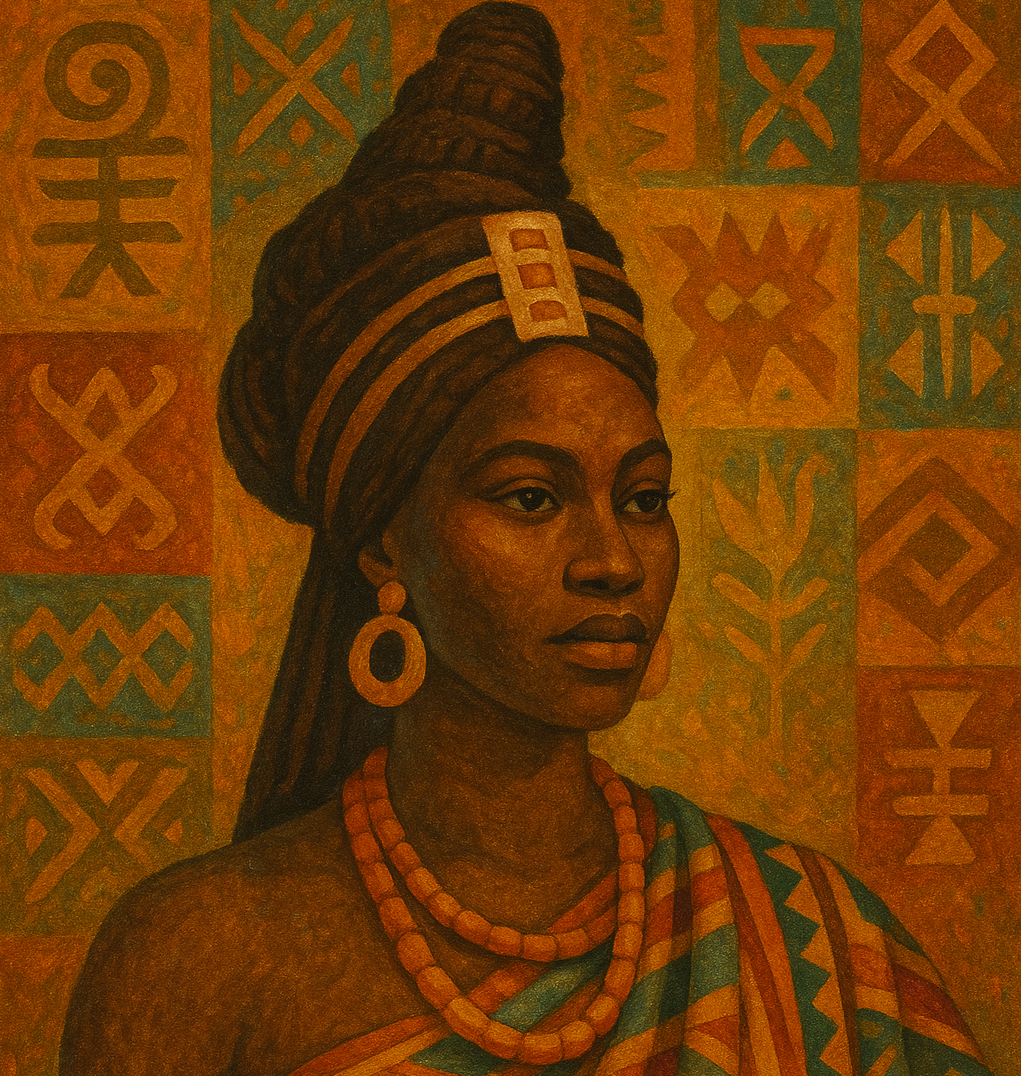
Abla Pokou is the queen and founder of the Baoulé people of Côte d'Ivoire. Born a princess in Kumasi, niece of Osei Tutu I, she led a dissident Asante group west after a succession war — and, tradition says, gave her only son to the Komoé so that her people could cross.
Revered as a model of courage, sacrifice and female leadership, she is affectionately called the "mother of all the Baoulé". Her story is both a documented migration and a living myth — and this site tells both, carefully.
Three ways to read her story
The queen belongs to history, to oral tradition and to the nation's memory. We keep the three apart — and show how they meet.
Legend
The Komoé, the diviner, the hippopotamuses, the cry "Ba ouli" — in many versions.
The Queen's road
Five stations, from the court of Kumasi to the memory of a nation.
-
Kumasiearly 18th c.
A princess of the Asante royal house; her brother Dakon is killed in the succession war.
Read → -
The exodusc. 1750
A long, dangerous march north-west, with scouts ahead and the new king's army behind.
Read → -
The Komoéc. 1750–1760
A river in flood, a diviner's verdict, a sacrifice — and a people saved.
Read → -
Walèbo & Sakassouafter c. 1760
Settlement between the Komoé and the Bandama; Akwa Boni expands the young kingdom.
Read → -
Memorytoday
Tadjo's novel, an animated film, the Abla Pokou Festival in Sakassou.
Read →
Ba ouli — the child is deadThe cry from which the name "Baoulé" is said to come
Explore
14 dossiers on the queen, her people and her legacy.
The Story
The Queen: Abla Pokou
Princess of Kumasi, queen and founder: who she was and why she is remembered.
Read more →The Kumasi Crisis & the Exodus
A succession war, a murdered brother and a long flight toward the west.
Read more →The Sacrifice of the Komoé
The river, the diviner, the hippopotamuses and the cry "Ba ouli".
Read more →Versions of the Legend
Mater Dolorosa, refusal, madness, Karim, albino, golden cloth: how the story keeps changing.
Read more →Founding the Kingdom
Pokou, Akwa Boni, Walèbo and Sakassou: two stages of a founding.
Read more →Timeline
From the Kumasi crisis to the Abla Pokou Festival: key dates, filterable by era.
Read more →Culture
Baoulé Society
Village chiefs, councils of elders, secret societies and matrilineal succession.
Read more →Arts, Masks & Textiles
Queen figures, the goli mask, woven pagnes and the "Queen Pokou jacket".
Read more →Oral Tradition & Proverbs
Tales, songs, storytellers and the wisdom attributed to the queen.
Read more →Adinkra & Royal Symbols
Sankofa, Akoma, Adinkrahene and other Akan symbols that echo the queen's story.
Read more →Legacy
Literature, Film & Stage
Véronique Tadjo, Maximilien Quenum, the 2013 animated film and the theatre.
Read more →The Abla Pokou Festival
The annual cultural festival of Sakassou: programme, dances and themes.
Read more →National Symbol & Debates
Delafosse, Houphouët-Boigny, stamps and the historians who question the myth.
Read more →Places of the Legend
Kumasi, the Komoé, Walèbo and Sakassou, between Komoé and Bandama.
Read more →Glossary
Key words: Ba ouli, abusua, Nana, komien, Goli, Walèbo and more.
Read more →The language of the Akan symbols
Sankofa: "go back and fetch it" — what we forgot is not lost.
Adinkra symbols — the heart of Akoma, the rings of Adinkrahene, the chain of Nkonsonkonson — carry values that echo the queen's story: memory, leadership, unity, endurance.
Discover the symbolsA festival in her name
Every year Sakassou, capital of the Baoulé kingdom, hosts the Abla Pokou Festival: conferences, theatrical re-enactments of the exodus, tales and legends, the Miss Atôwlê contest, and dances such as the Goli and the Adjémlé.
Sister sites
Follow the story further: the Baoulé people, their community website, and their Akan cousins in Ghana.